Module 3: Nutrition

Training in household-related services

After the first and second successful runs of the BIWAQ V training program for household-related services with Module 3 Nutrition, the third run was launched in January 2026.

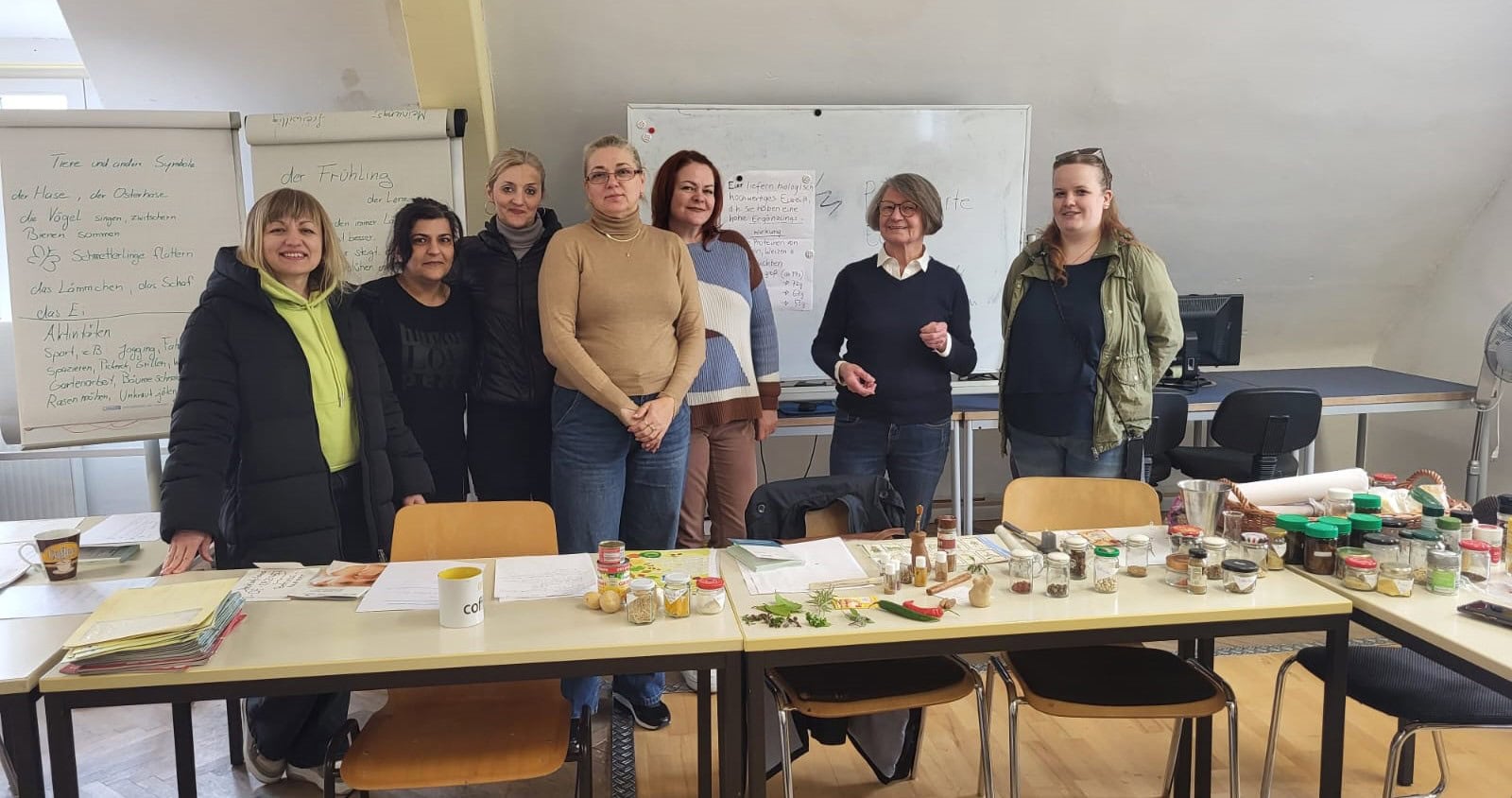
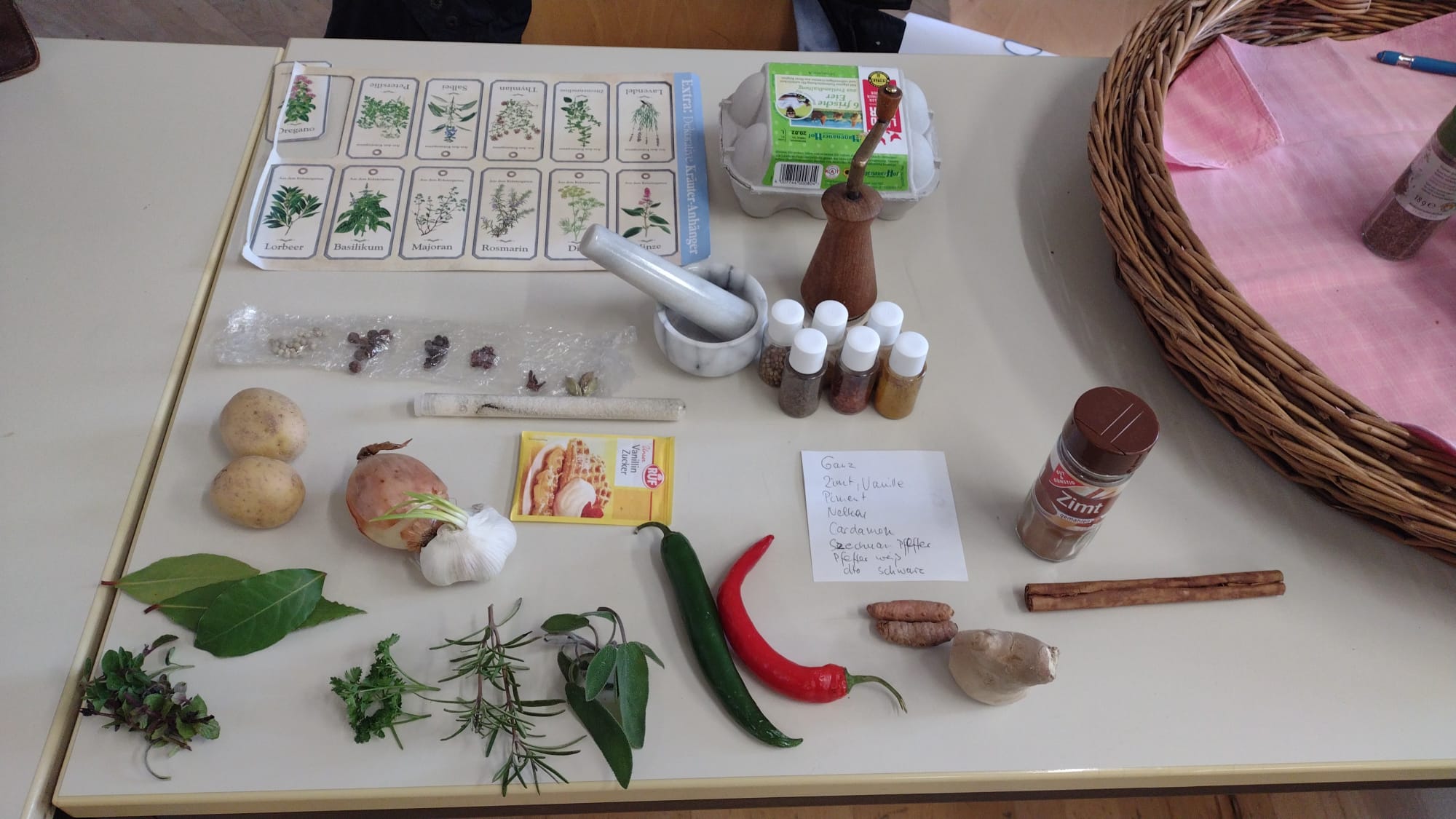
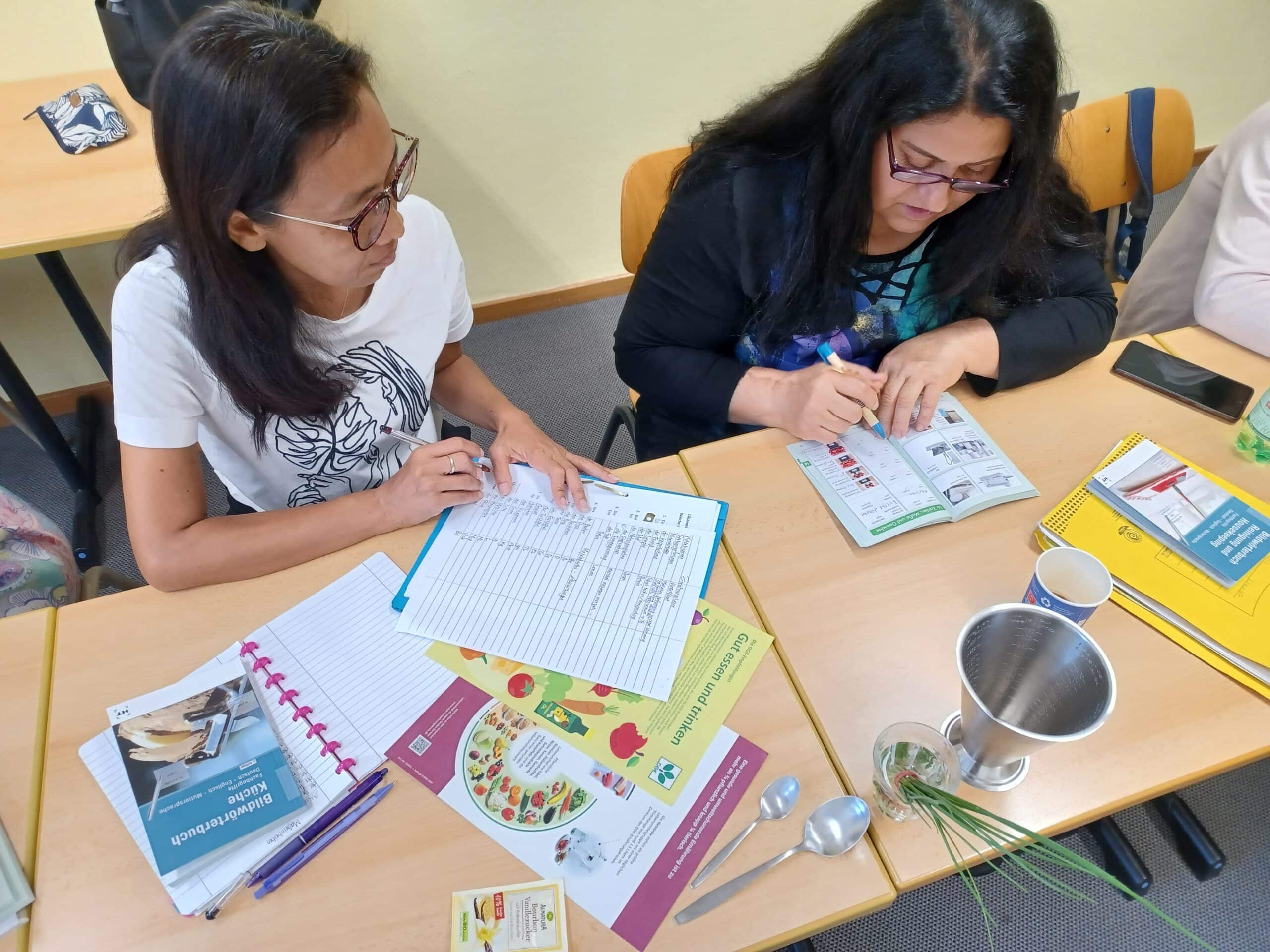
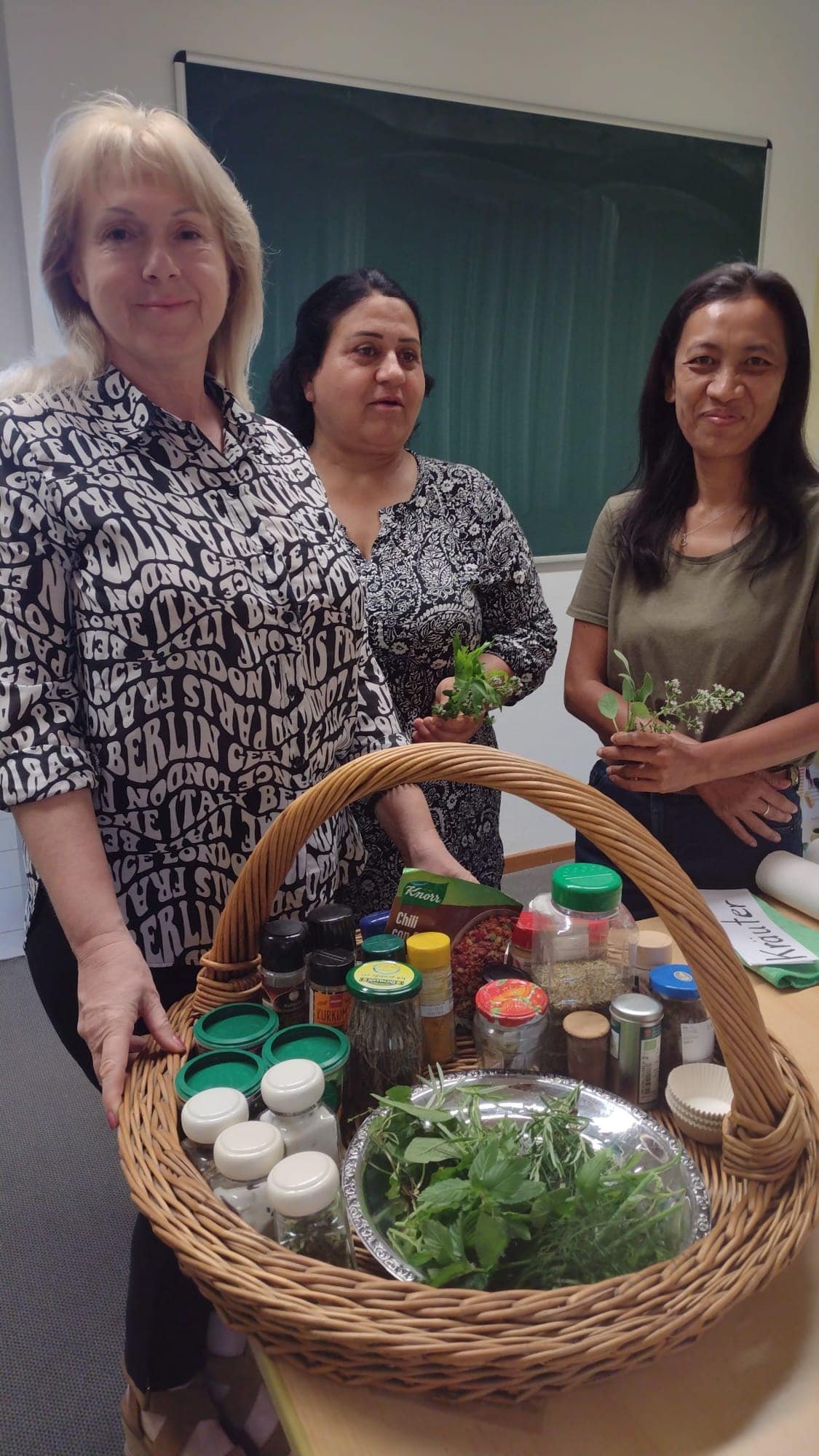
The training module Nutrition led by Christel Steiner, lecturer at the Gmünd VHS, provided 14 participants with in-depth specialist knowledge on various aspects of nutrition:

Each technical theory was vividly supplemented by a practical section. For example, in the household appliances unit, Christel Steiner demonstrated how to cook chips economically and effectively in a hot air fryer. The participants compared frozen chips with home-made chips as well as bought dips and home-made dips.

The price comparison showed that the home-made chips made from regional organic potatoes from the market were even cheaper than the frozen goods. Christel Steiner also pointed out their ecological advantages: no long transportation routes and shopping without plastic waste. When it came to dips, it was noticeable that ready-made products in shops are usually more expensive than a home-made organic herb and quark dip.

The participants then evaluated the taste, consistency and overall impression of the products in a test meal. The homemade fries impressed with their fresher taste and individual seasoning, while the frozen fries scored points for their uniform shape and crispy consistency. The homemade herb and quark dip was predominantly perceived as fresher and more aromatic, while the store-bought dips were sometimes described as more strongly seasoned or artificial in taste. In summary, it can be said that homemade products can offer advantages in terms of both taste and price, but require more time and preparation than ready-made products.

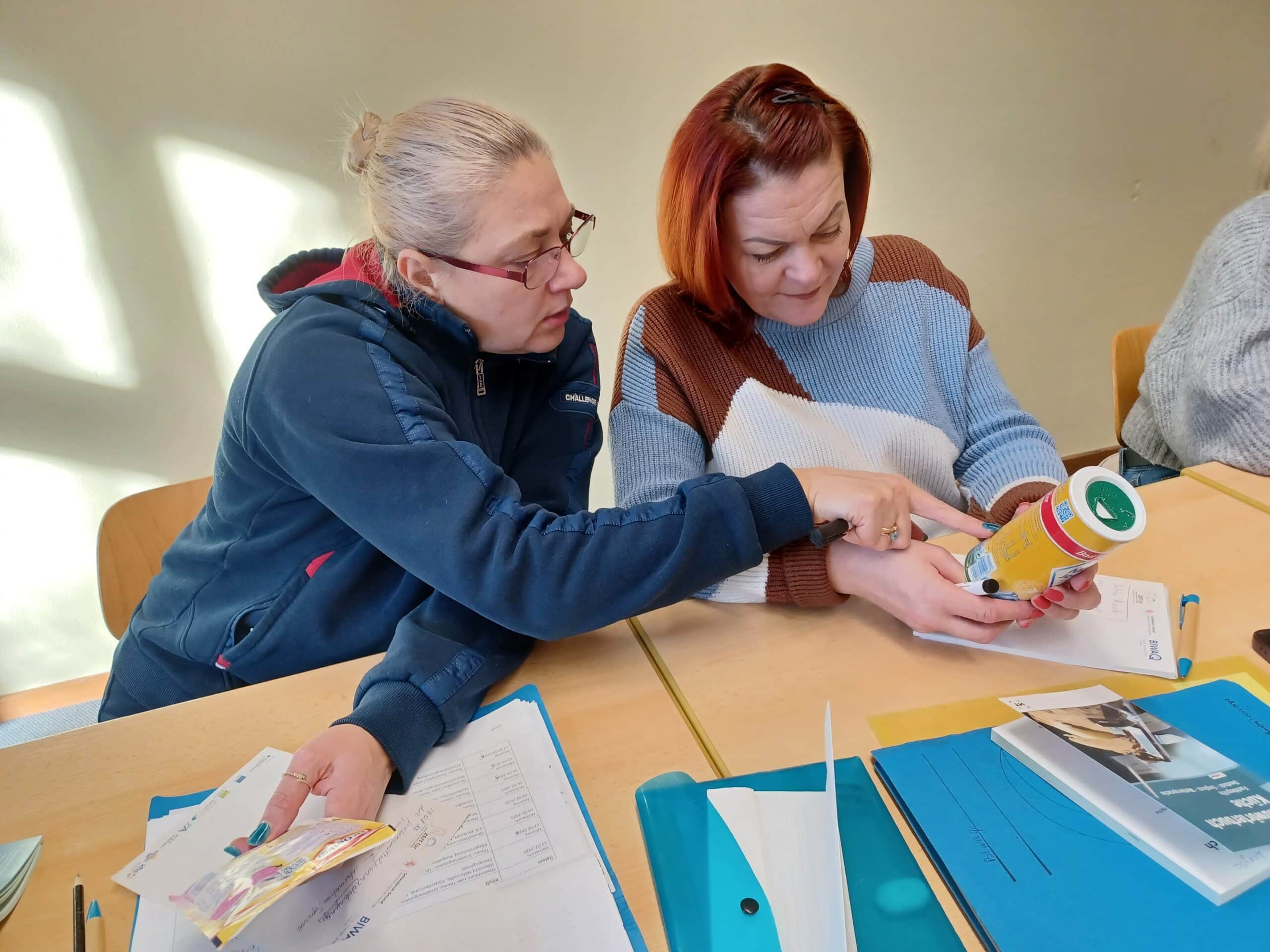
The nutrition module comprised eight sessions. This alternated between specialist theory/practice and the preparatory German course, which was led by Vera Holzwarth from the Gmünder VHS. In these units, the participants worked on the relevant technical vocabulary and also dealt with topics such as communication in the workplace.

According to feedback from the participants, the alternation between the German course and specialist theory proved to be particularly beneficial, as was the case in the first two rounds. The combination of practice-oriented content and language support enabled the participants to develop important skills that improve their career opportunities and at the same time make them more aware of their nutritional behavior in everyday life.

The specialist theory and the German course of Module 3 Nutrition took place in the BIWAQ training rooms in the Unipark.

The training program for household-related services continues:

On 23.03.2026, eleven participants completed Module 2 Cleaning/Hygiene.

On April 15, 2026, Module 5 Everyday support and caregivers in senior citizen work will start.
Monday mornings are spent in specialist theory and Wednesday mornings preparing specialist vocabulary in the accompanying German course.

26.03.2026
Vera Holzwarth

Module 4: Introduction to the use of computers and digital possibilities

Training in household-related services

From 26.11. to 15.12.2025, eight participants successfully completed the fourth module of the BIWAQ V training course „Household-related services“ entitled „Introduction to the use of computers and digital possibilities“. Under the direction of Vera Holzwarth (Schwäbisch Gmünd VHS) and Sami Ehlhardt (Schwäbisch Gmünd Technical Academy), the participants were introduced to the world of computers and digital applications on a total of six dates.

The course had two coordinated phases: German course and specialist practice, which were carried out alternately. In the German course, Vera Holzwarth explained the most important terms and basics of technical language. Afterwards, the words and rules could be applied directly in the practical part with Sami Ehlhardt.

In order to tailor the content specifically to the needs of the participants, the participants jointly selected the topics to be covered in the course.

The topics covered included:

Participants were shown how to use computers safely. The benefits and risks of digital applications were also explained. They also learned how to continue learning independently and make good use of digital tools.

The participants showed great interest, actively participated and benefited from the structured alternation of language and practical phases. This proved to be particularly effective in ensuring that the content was well understood and applied. The training program will be continued in 2026.

10.03.2026

Vera Holzwarth

Module 5: Everyday support and caregivers in senior citizen work

Training in household-related services

Due to the high level of interest, Module 5 Everyday support and care workers was offered a second time with extended content as part of the BIWAQ V training program for household-related services. Carina Deutscher, a speaker from a.l.s.o. Schwäbisch Gmünd, offered nine participants a comprehensive introduction to working with older people from 24.09. to 24.11.2025, accompanied by a German course given by Vera Holzwarth from the Schwäbisch Gmünd VHS.

As in the first successful run of this module in spring 2025, the aim was to give participants an insight into the varied tasks involved in care and nursing so that they can expand their knowledge and acquire new skills:

Three additional topics were added to the second round of Module 5:

The module for everyday support/caregivers consisted of 16 sessions: Specialist theory with practice took place alternately on eight dates and a German course on eight dates. Here, the participants prepared the specialist vocabulary for each topic under the guidance of Vera Holzwarth. The German course took place in the BIWAQ training room in Unipark and the specialist theory with practice took place in a.l.s.o. training rooms.

Module 5 Everyday companionship and caregivers provided participants with comprehensive and valuable insights into this professional field through the combination of sound specialist theory and practical exercises. This is also evident from the feedback. Some of the participants would like to gain qualifications in this field. The BIWAQ team is currently looking into the possibilities for this.

Although the technical vocabulary was challenging, all participants were very satisfied with the training at the end. As in the previous modules, the combination of a German course beforehand and subsequent technical theory with practical elements proved to be particularly beneficial.

The training program for household-related services continues: Module 2 Cleaning/Hygiene is currently taking place for the third time. On 15.04.2026, Module 5 Everyday support and caregivers in senior citizen work will begin.

The technical theory with practice is offered on Monday mornings. All modules have the accompanying German course on Wednesday mornings.

10.03.2026
Vera Holzwarth

Prevention theater „Bambolina's Magic“ makes a guest appearance at the shared accommodation on Hardt

Schwäbisch Gmünd (sv). The use of digital media today often begins at primary school age. Many children have their own smartphone, watch videos on the internet or communicate via messenger services. The internet offers them numerous opportunities to learn, be creative and get in touch with others. At the same time, young users are also exposed to risks: cyberbullying, inappropriate content, data protection issues and uncontrolled screen time are among the biggest challenges.

This is why it is important to take preventative action at an early stage. Elementary school Hardt, together with the Ostalbkreis district office and project partner BIWAQ V, is sending out a clear signal in this regard. The aim is to raise children's awareness and teach them skills for safe and conscious use of the internet. Children with refugee experience in particular should be given special support when using the Internet, as news and images from their war-torn homeland can trigger strong emotions and they have to learn to differentiate between incriminating and false content.

A special component of this prevention work is the prevention theater „Bambolina's Magic“ from Theater SNF, which deals with difficult topics in a child-friendly and vivid way. On Thursday, November 13, the shadow theater performed in the shared accommodation for refugees at Hardt. Scenes were used to depict situations from everyday digital life, such as the pressure of constantly being online or dealing with hurtful comments online. Children recognize themselves in the stories and learn how to behave correctly in such moments. The performance was followed by an open discussion with the artist Sarah N. Groß, in which the children were able to ask questions and contribute their own experiences.

The project shows how effective prevention can be when it is designed in an emotional, creative and realistic way. In the long term, this work helps to strengthen children, promote their self-confidence and guide them safely in the digital space. After all, using media safely is just as important today as reading, writing and arithmetic - and it starts at elementary school. The prevention theater is a strong example of successful cooperation between the Hardt elementary school, the Ostalbkreis district office and the city of Schwäbisch Gmünd, funded by the BIWAQ V project.

BIWAQ workshop on interior design for women in the a.l.s.o. wood workshop

"I never thought I could enjoy it so much"

Crafts can be fun - that was an important goal of a series of workshops for women in the wood workshop.

Under the expert guidance of carpenter Almut Holtz, the participants were introduced to manual activities step by step and succeeded in arousing curiosity and reducing insecurities.

With the topic of "upcycling", it was important to address the aspect of sustainability and resource conservation, a perspective that is very important to a.l.s.o. e.V. and the project as a whole:

Simple leftover pieces from dowel production - narrow wooden strips measuring 30 x 5 cm x 5 mm - were to be used to create useful and creative everyday objects.From small tea racks and wardrobes to decorative cupboards or games: Each participant developed her very own idea and put it into practice.

Over the course of the workshop, the participants gained a wide range of experience:

The event concluded with a small presentation of the products created, during which the participants proudly presented their results.

BIWAQ V - Language café - Learning to speak together

In June and July, ten participants took part in the language café, which was offered for the first time as part of BIWAQ V. Led by Vera Holzwarth, a lecturer at Schwäbisch Gmünd VHS, the participants spoke and practiced German in a relaxed atmosphere.

The aim of the participants was to speak German better in everyday life.

One important aspect was communication in the workplace. The focus was on actively entering into dialog and feeling more confident in the use of language. Mistakes were allowed. After all, you can learn a lot from mistakes and thus improve your language skills. The participants worked on words that are useful for their respective fields of work. Dialogues were practised in the workplace to prepare participants for typical situations, such as asking for a favor or giving advice. The participants also practiced small talk, which makes it easier for them to communicate in informal situations at work. Another aspect was speaking and understanding the time in both formal and informal settings. In order to take regional particularities into account, the participants learned Swabian time, whereby the focus here was only on understanding it.

The language café took place in the a.l.s.o. Café and offered a pleasant learning atmosphere in which learning was fun. This was evident from the participants' feedback. They found the choice of topics interesting and wished for more time to practise dialogues.

After the summer break, the language café will continue, at the request of the participants for one hour longer than before. Other everyday topics such as shopping, going to the doctor, kindergarten, housing, etc. will be covered.

When: 15.09. to 15.12.2025, Mondays, 1.15 p.m. to 3.30 p.m.

Where: a.l.s.o. Café, Goethestraße 65, 73525 Schwäbisch Gmünd

24.07.2025

Vera Holzwarth

Review: "Household-related services" Module 5

Training in household-related services

Module 5: Everyday support and caregivers

For the first time, the BIWAQ V training program for household-related services Module 5 Everyday support and caregivers offered.

Carina Deutscher, a.l.s.o. Schwäbisch Gmünd, offered 14 participants a comprehensive introduction to working with older people from the end of April to the beginning of June. The aim was to give the participants an overview of the wide range of tasks involved in care and nursing so that they could expand their knowledge and acquire new skills.

The everyday support/caregiver module consisted of ten sessions: Five dates alternated between theory and practice and five dates between a German course was given by Vera Holzwarth from the Gmünd VHS. Here, the participants prepared the specialist vocabulary for each topic. The specialist theory with practice took place in training rooms at a.l.s.o., while the German course was held in the BIWAQ training room at Unipark.

Module 5 Everyday companionship and caregivers provided participants with valuable insights into this field of activity through the combination of specialist theory and practical exercises. This is also evident from the feedback. Six of the 14 participants can actually imagine accompanying elderly people in their everyday lives in the future. Five participants see this as a possible field of activity for themselves. Even though the technical vocabulary was challenging for some, everyone was very satisfied with the training. As in the previous training modules, the participants benefited from the alternation between the preparatory German course and the specialist theory with practice.

The training program for household-related services continues: Module 1 on environmental protection with Ilka Fiebig (GOA) has just taken place for the third time. Due to the high level of interest, Module 5 on everyday support and caregivers will start again after the summer vacations on 17.09.2025 under the direction of Carina Deutscher (a.l.s.o.). In order to do justice to the extensive topics, this time the module will run over a longer period (10 weeks).

On Monday mornings, there are lessons in technical theory with practice. All modules have an accompanying German course on Wednesday mornings, in which Vera Holzwarth prepares the technical vocabulary with the participants.

17.07.2025

Vera Holzwarth

Specialist theory, TN and Carina Deutscher Speaker of a.l.s.o.
TN German course, Schwäbisch Gmünder VHS with Vera Holzwa rth
German course challenging, words with many meanings, Storung, Einschrankung
German course, learn technical terms, diseases, symptoms
German course, the participants work together on the specialist vocabulary (2)
Excursion to St. Loreto, Institute for Social Professions Schwäbisch Gmünd, left Carina Deutscher, Iris Oechsle
German course, What is communication

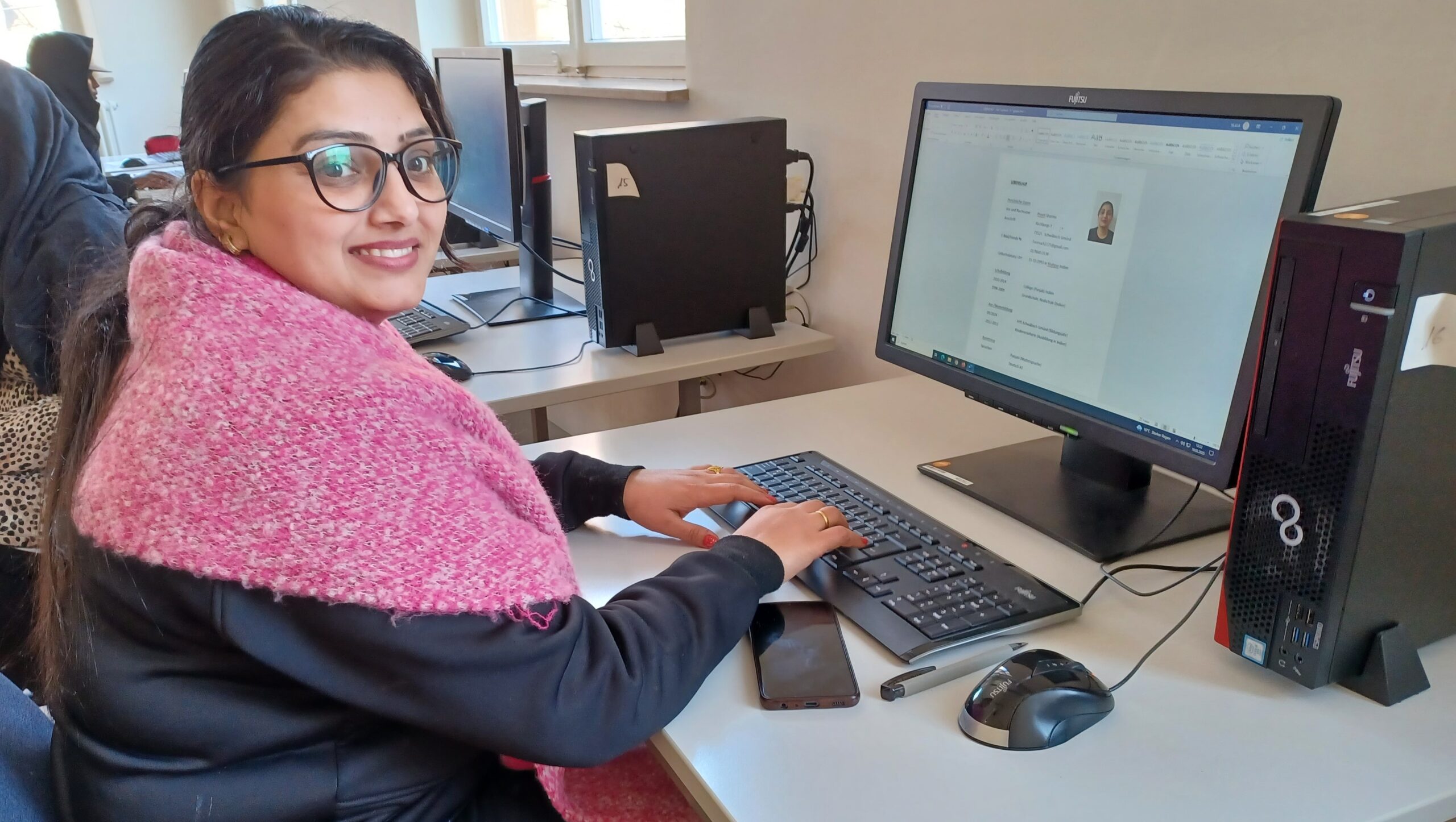
Job application training for German learners

From January to February 2025, 13 participants worked on their applications for an internship. The BIWAQ application training took place in cooperation with the VHS German course Bildungsjahr.

The German course Bildungsjahr covers the topics of practical vocational German, political education, IT basics and digitalization as well as career orientation. A central component is a five-week work placement. The aim of the educational year is the professional integration of the participants.

Guided and supported by Vera Holzwarth, who works as a BIWAQ project employee at the Gmünd VHS, and in coordination with Radka Effenberger, VHS lecturer during the educational year, the BIWAQ training course enabled participants to improve their application documents and prepare for possible job interviews. The participants prepared their application documents on seven dates:

They initially focused on the content and structure of their CV and cover letter as well as the correct choice of words. The participants then corrected spelling, grammar and punctuation using both the computer's auto-correction function and with each other's help. This was followed by the finishing touches, namely a uniform font and font size, line spacing and sensible paragraphs. 

The preparation of lists of important technical terms for the respective activities in the internship and the creation of the template for the internship diary on the computer rounded off the application training and prepared for the internship.

The participants were very interested and motivated. Using their application documents, they independently looked for internships at various companies and institutions in Schwäbisch Gmünd and were successful. All of them were able to complete an internship. 

The additional job application training provided the participants with important knowledge for their applications. The lecturer's extensive professional experience in the field of career guidance enabled her to provide tailored support for this important step towards professional integration.

08.04.2025, Vera Holzwarth
Review: "Household-related services" modules 2 and 3

Training in household-related services

Module 2 and 3: Cleaning/hygiene and nutrition

Following the first successful run of the BIWAQ V training programme for household-related services with the modules on environmental protection, cleaning/hygiene, nutrition and digitalization, the second run started at the beginning of December 2024. The cleaning/hygiene and nutrition modules took place again from the beginning of January to mid-March.

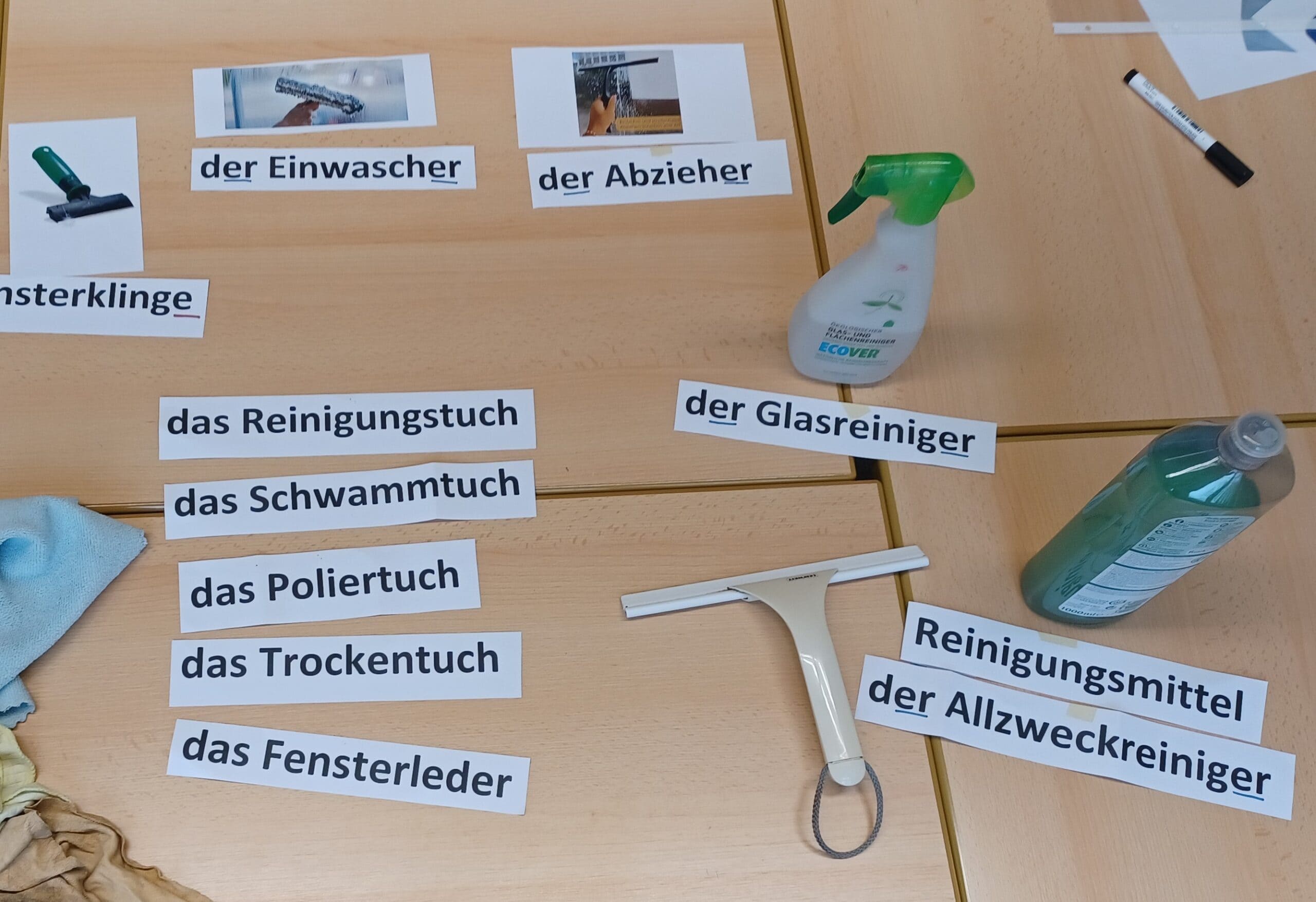
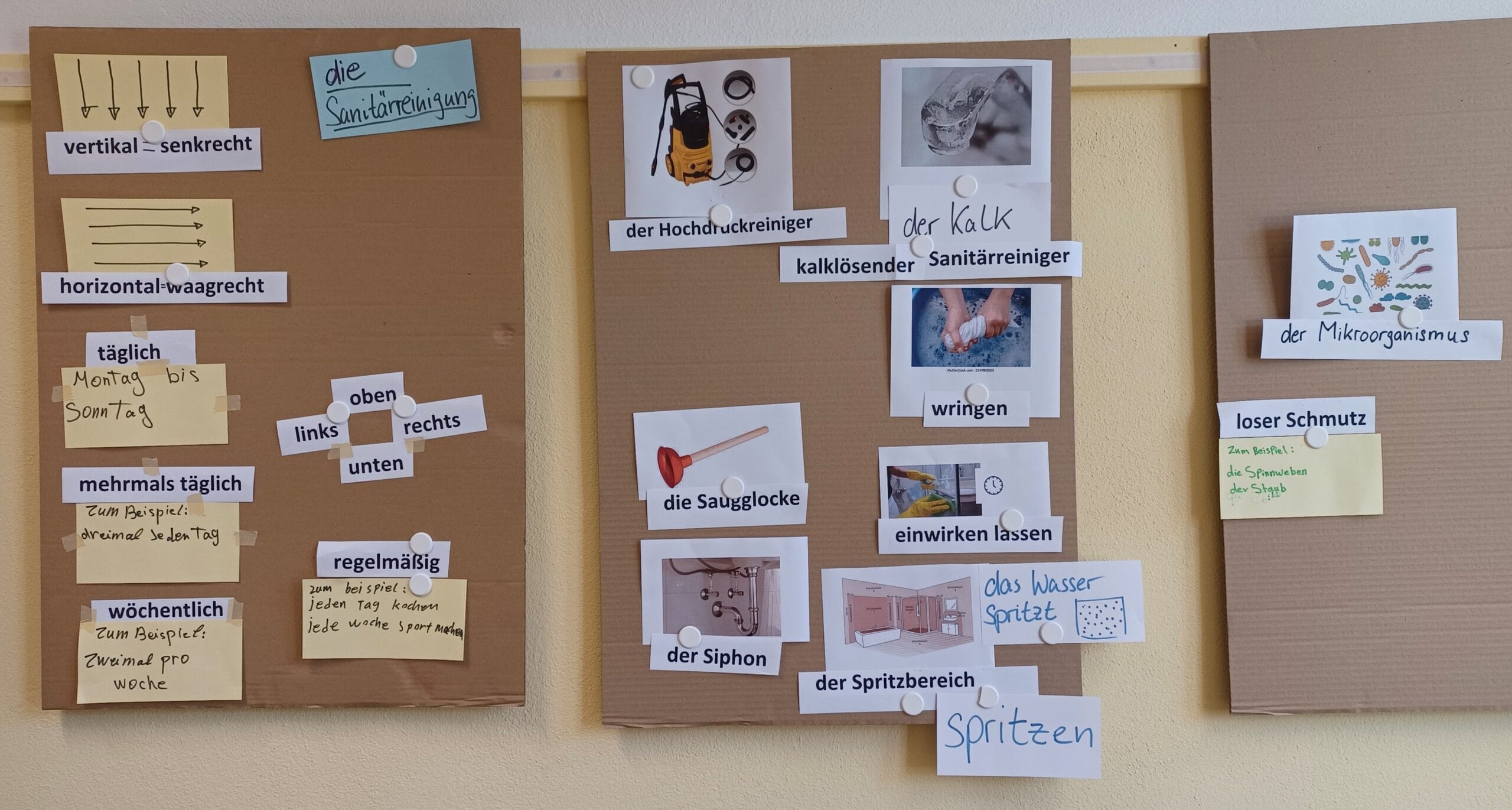
In the training Cleaning/hygiene the participants learned about professional cleaning techniques under the guidance of Martina Zach from the vocational preparation center in Ruppertshofen:

The training Nutrition led by Christel Steiner, lecturer at the Gmünd VHS, aimed to provide participants with in-depth knowledge about various aspects of nutrition.

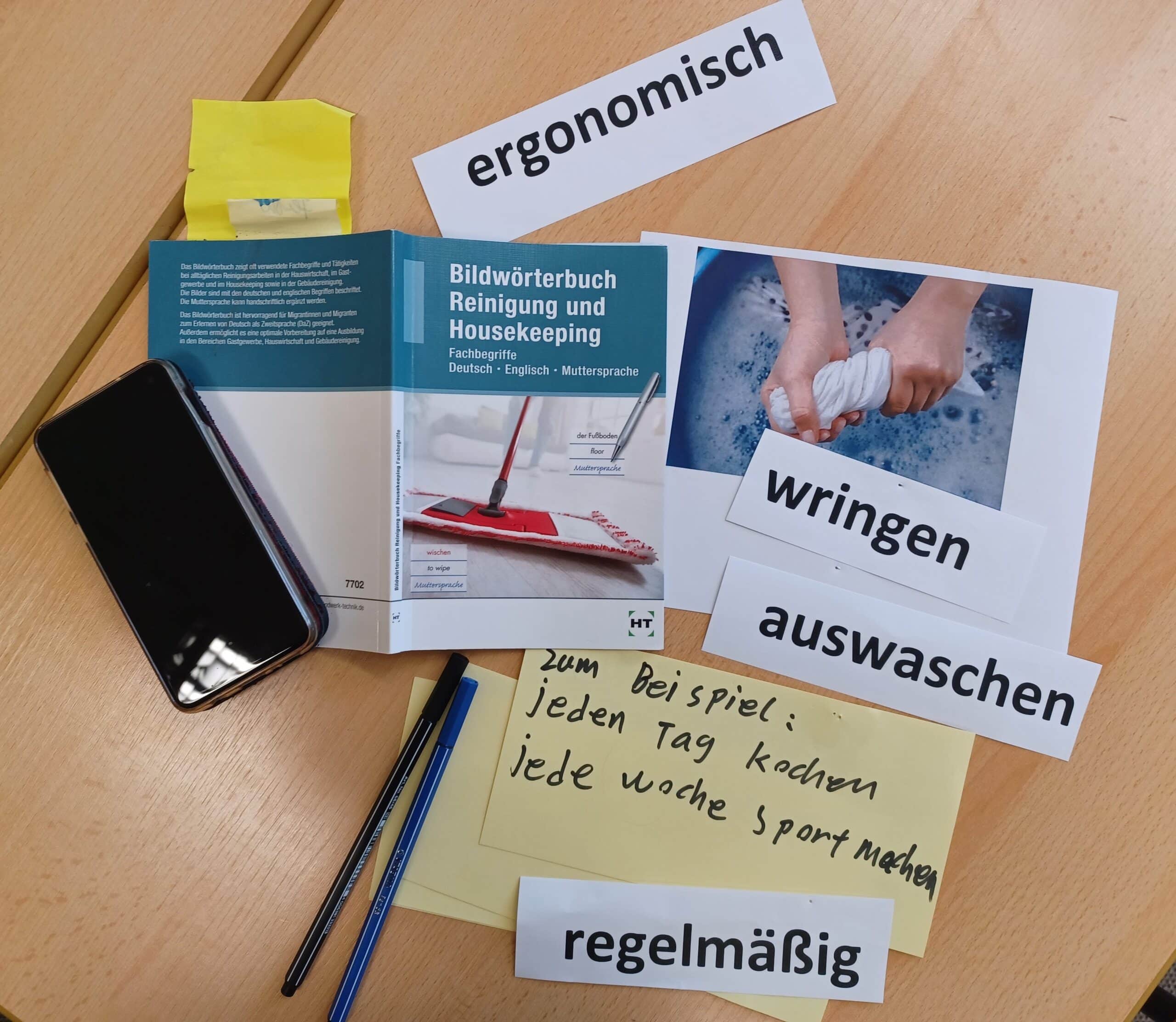
Both the cleaning/hygiene module and the nutrition module consisted of eight sessions: each module alternated between four sessions of specialist theory and four sessions of German course Vera Holzwarth from the Gmünd VHS organized the course. Here, the participants prepared the specialist vocabulary for each topic and dealt with other content such as communication in the workplace.

Feedback from the participants showed that, as in the first round of the training program, they benefited from the alternation between the preparatory German course and the specialist theory.

The specialist theory of Module 2 Cleaning/Hygiene and Module 3 Nutrition took place in training rooms at a.l.s.o., the German course was held in the BIWAQ training room at Unipark.

Modules 2 and 3 were a great success. By combining practice-oriented content and language support, they provided participants with valuable knowledge and skills that not only broadened their career prospects, but also contributed to a more conscious approach to cleaning/hygiene and nutrition in everyday life.

The range of training courses on household-related services continues: Module 4 on digitalization is currently taking place with Sami Ehlhardt (Schwäbisch Gmünd Technical Academy). At the end of April, the new Module 5 Everyday Support and Caregivers will start under the direction of Carina Deutscher, lecturer at a.l.s.o. 

On Monday mornings, modules 4 and 5 include lessons in technical theory and on Wednesday mornings, the preparation of technical vocabulary in the accompanying German course with Vera Holzwarth.

27.03.2024

Vera Holzwarth

2503 Nutrition theory, participants and VHS lecturer Christel Steiner

Review: "Household-related services" Module 4

Training in household-related services

Module 4: Introduction to computers and digital possibilities

In September 2024, six participants successfully completed the fourth module of the BIWAQ V training course "Household-related services" entitled "Introduction to the use of computers and digital possibilities". Under the direction of Vera Holzwarth from the Gmünd VHS and Sami Ehlhardt from the Schwäbisch Gmünd Technical Academy, the participants were introduced to the world of computers and digital applications on a total of eight dates.

The course was divided into two coordinated phases: Language and practice, which were carried out alternately. Vera Holzwarth taught the most important terms and language basics in the accompanying German course, which could then be applied directly in the practical part with Sami Ehlhardt.

In order to tailor the content specifically to the needs of the participants, various topics were presented in a separate session. The participants then selected together which topics should be covered in the course.

The topics covered included:

The aim was to teach participants how to use computers safely and highlight the benefits and risks of digital applications. At the same time, they were given strategies for continuing their own education and using digital tools efficiently.

The participants showed great interest, were actively involved and benefited from the structured alternation between language and practical units. This combination proved to be particularly effective in successfully absorbing and applying the course content. The training program will also be continued in 2025, with new modules and